HR is no longer simply an administrative support function, but a key driver of organizational operations and competitiveness.
The efficiency, transparency and responsiveness of HR processes directly influence business performance.
In this environment, the xFLOWer workflow platform is not just another HR system,
but an operations management framework that sits above existing systems
and transforms human resources processes into structured, measurable and controllable operations.

-
In most organizations, HR processes run in parallel, often in separate systems:
one handles payroll, another recruitment, and a third training.
Handoffs between processes, however, are often informal: email, Excel or personal communication.The result: HR cannot accurately track
where a process stands, who owns the task and what is preventing progress.xFLOWer eliminates this lack of visibility:
it provides a process-based digital backbone for HR operations,
connecting every decision, task and deadline to the organizational structure and accountability framework.
-
The xFLOWer philosophy views HR not as a collection of modules, but as processes
that span the entire organization.Typical examples where xFLOWer creates strategic value:
-
Recruitment and selection: the application process, interview scheduling, evaluation and approval can be organized into a unified decision-making chain.
-
Onboarding: automatic allocation of role-specific permissions, equipment and access,
including IT systems and physical access. -
Offboarding: automated asset recovery, access revocation and equipment tracking.
-
Business travel, advances and expense settlements: a multilevel approval structure with rules-based budget management.
-
Foreign employee management: monitoring the validity of permits, accommodation arrangements and certificates.
-
Bulk onboarding and offboarding: for seasonal or project-based employment.
-
Simplified employment (EFO) declarations, leave requests and workplace accidents: logged and documented within a unified, controlled workflow framework.
These processes do not require a separate HR system—
only a platform that connects existing systems and decision points.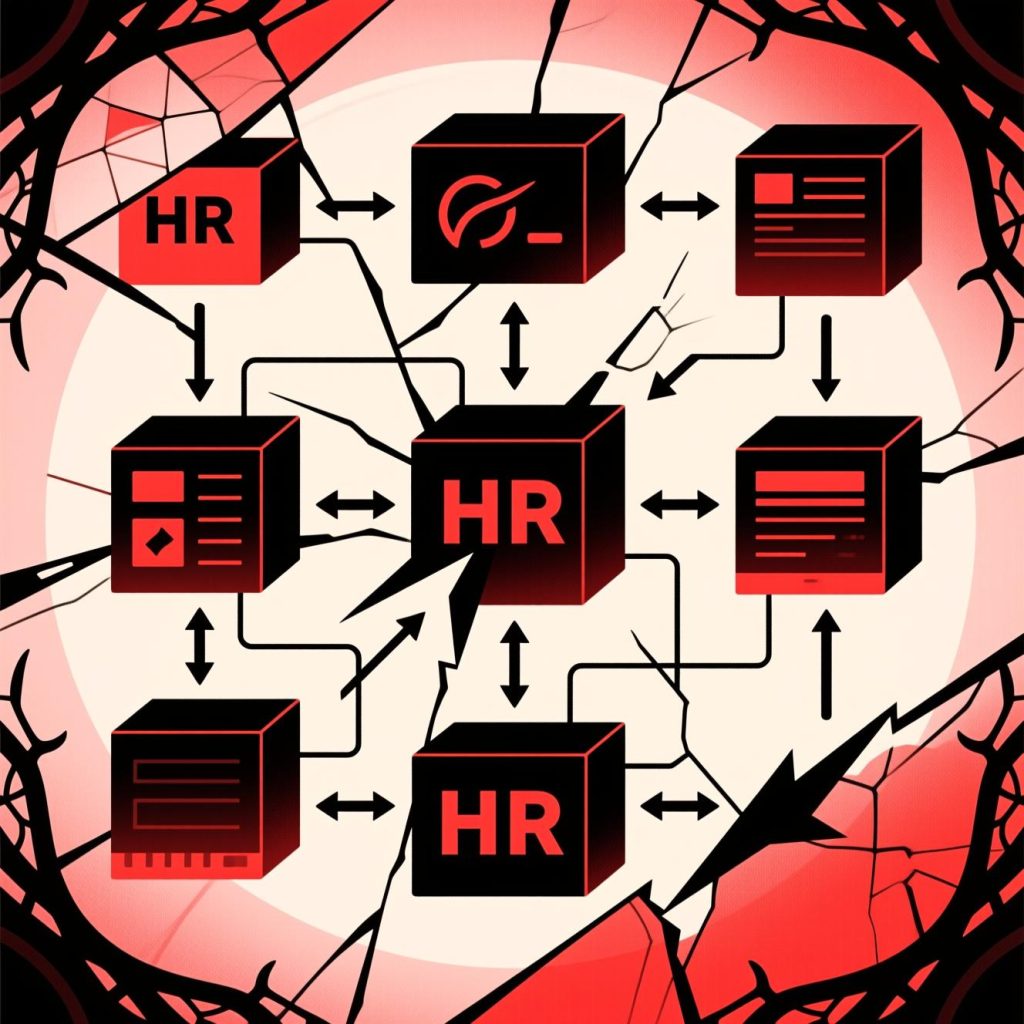
-
-
An important distinction must be made:
xFLOWer does not replace Nexon, SAP or payroll systems.
These remain the core systems for data management and payroll processing.Instead, xFLOWer provides the operational layer:
data is not simply entered into the system, but transformed into processes
that start automatically, move through decision points
and provide clear status reporting for HR leaders.
| Criterion | xFLOWer Workflow Platform | SAP SuccessFactors | Nexon HR | Traditional HR Software |
|---|---|---|---|---|
| Primary purpose | Operations management and process automation | HR administration and reporting | Payroll and attendance | Record-keeping |
| Process logic | Fully modelable, BPMN-based | Predefined templates | Limited, fixed structure | None |
| Integration capabilities | Open API, compatible with any HR/ERP system | Within the SAP ecosystem | With Nexon modules | Rare |
| Approval chains | Fully configurable | Limited | Basic | Manual |
| SLA and status tracking | Real-time visual dashboard | Partial | Partial | None |
| Document management and logging | Built-in, version-controlled and audited | Integrated module | External | File sharing |
| User experience | Process-based, visual | Tailored to HR staff | Administrative | Form-based |
-
-
An important distinction must be made:
xFLOWer does not replace Nexon, SAP or payroll systems.
These remain the core systems for data management and payroll processing.Instead, xFLOWer provides the operational layer:
data is not simply entered into the system, but transformed into processes
that start automatically, move through decision points
and provide clear status reporting for HR leaders.
-
xFLOWer transforms HR processes into an operational architecture.
It is not a new system, but the connections and decision logic between systems.
As a result, HR becomes more than a data custodian—it becomes an operational hub:
one of the organization's most stable and measurable functions, with some of the greatest potential for improvement.