Background to the Market Research
This market research was commissioned from an external partner by Click On Hungary Kft., the developer of xFLOWer. The aim was to provide our potential customers with an objective overview of the software vendors operating in the workflow and process automation market.
For more information on the background to this research and a summary of the methodology, please read the introductory article in our blog series.
Scope
Categories
- Hungarian market players
- Work management
- Enterprise workflow
- Low-code / no-code
Comparison Criteria
- Features
- Infrastructure
- Pricing type
- Public pricing / custom quote
- Pricing model
- Free trial
- Platform (desktop, web, mobile app)
You can find more information about the scope and terminology used here.
Low-Code / No-Code: The Future of Business Applications
What Makes It More Than a Workflow?
In our introductory article, we attempted to distinguish between workflow solutions—which typically aim to automate a specific business process—and low-code / no-code solutions, which enable the creation of complete business applications. Naturally, these are not official categories, and the line between the two concepts is extremely thin. For example, we are not aware of any low-code / no-code platform without workflow functionality, while many workflow systems enable process automation without programming knowledge, as discussed in our previous analyses. In our view, the solutions examined here differ from the workflow solutions reviewed earlier primarily because, beyond workflow functionality, they also offer a platform that supports a much broader range of business application development, including complex customer portals, websites, and even mobile applications.

Pega
With such a complex platform, it is difficult to describe not only its functionality but also the diversity of its applications in just a few sentences. Perhaps Pega’s slogan best captures its true purpose: “Build for whatever comes next – right now”. Founded in 1983, Pegasystem is now headquartered in Boston, USA, and employs 6,748 people worldwide. It stands out among the solutions presented so far not only in terms of workforce size, but also through last year’s revenue of $1.2 billion. Its customers include global companies such as HBSC, Siemens, and Cisco.
It provides comprehensive process automation functionality, with tasks primarily displayed in the familiar kanban view, enabling task management through a highly streamlined and clear interface. Naturally, we can also build automations for the processes managed here. The Case Management module allows us to test, compare, and improve them as well. We have already seen these capabilities in several other solutions, so it is worth focusing here on the features that further expand users’ options.
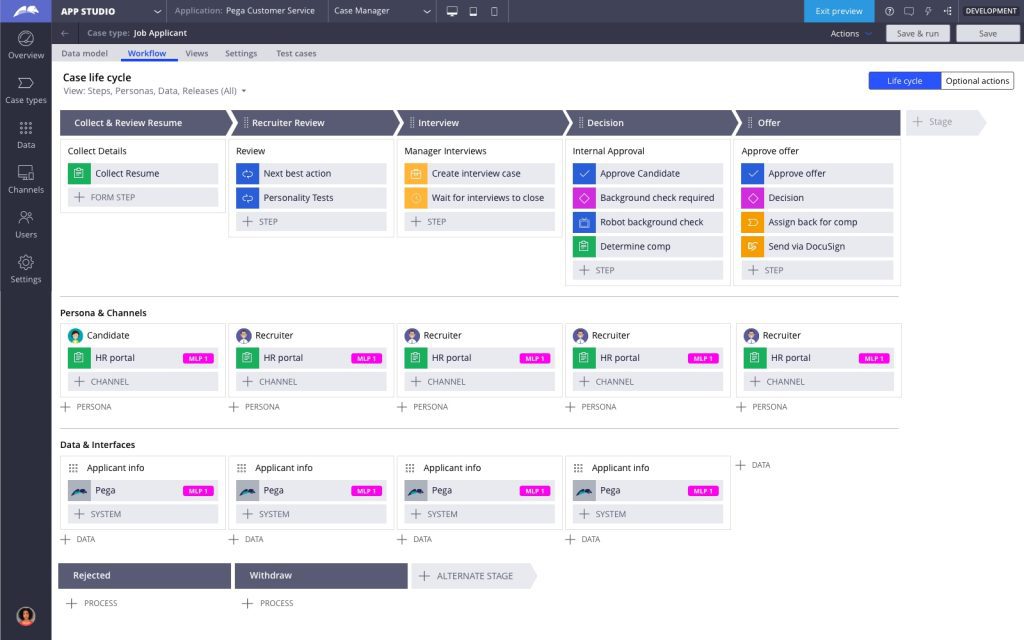
Pega also offers an AI-powered chatbot and virtual assistant that can be connected to any business workflow. Whether users are employees of the company using the platform or external customers, they can request help at any point in the process in a way that makes the interaction feel like a conversation with a real person. Naturally, new workflows can be triggered based on the answers provided. This solution therefore represents a significant step towards developing complex business applications, without requiring software development expertise.
Pega’s DevOps and Testing module provides a studio where we can also create business applications without programming knowledge. These can be tested in several ways, including automated testing, and can even be published to users with a single click.
A more advanced level of automation involves using bots to automate repetitive tasks within individual process steps, alongside workflow solutions that automate cross-functional business processes. The relevant module provides comprehensive RPA functionality for this purpose. In addition, the Workforce Intelligence feature can use bots to analyze data and identify areas where automation may be needed.
Naturally, we should not expect to find pricing on the website for such a complex service offering. However, it is possible to explore the platform independently in a demo environment by requesting access from Pega.
Mendix
Mendix certainly deserves its position among the leaders in the Gartner Magic Quadrant and Forrester Wave Report assessments of low-code / no-code solutions. Also headquartered in Boston, USA, the company was founded in 2005 and is growing rapidly, with a workforce of 1,320. Last year, it generated approximately $274 million in revenue from more than 4,000 customers and 50 million end users, who have already built nearly 200,000 business applications on the platform.
As expected of any capable low-code / no-code platform, Mendix offers a highly streamlined graphical process editor called MX Studio, where we can model any business process using drag&drop functionality.
With Data Integration, we can build data architectures and integration connections with minimal programming knowledge, making it easy to connect business applications created on the Mendix platform to existing systems or applications.
Mendix Cloud also supports the management of cloud-based applications, allowing us to publish applications across multiple environments in just a few clicks.
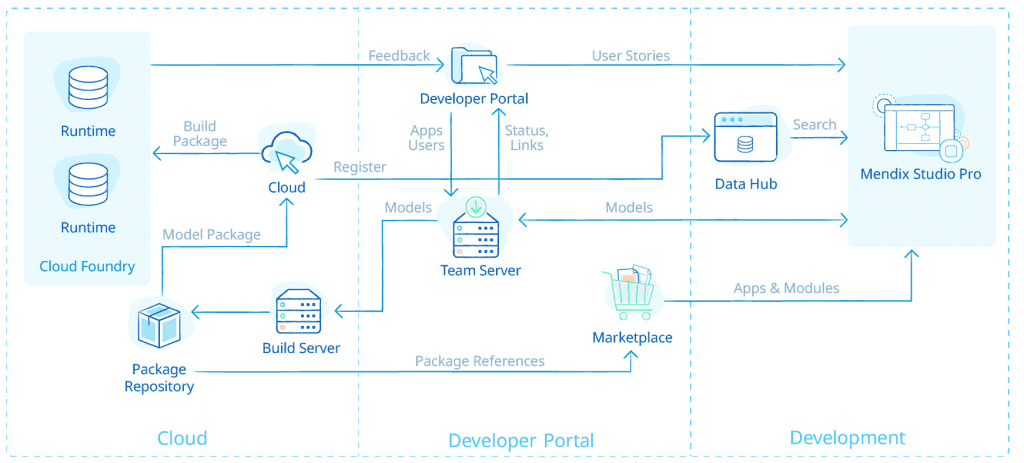
Of course, a modern enterprise application offers limited value without a mobile interface or app. Mendix addresses this as well, enabling the creation of cross-platform applications linked to business processes without programming knowledge.
The platform is further strengthened by “Starter Apps”, available from the outset. These packages essentially serve as templates for various business applications, such as a leave request app. In addition, the Marketplace allows us to integrate numerous applications and features provided by external developers into our solutions.
Somewhat surprisingly, Mendix publishes pricing on its website and even offers prospective customers a free trial. For monthly subscription plans, pricing naturally depends on both the number of users and the number of business applications managed. The Basic and Standard plans provide an indication of costs, but enterprises should request a custom quote based on their specific user count.
KissFlow
With more than 10,000 satisfied customers, Kissflow follows the trends outlined above. Founded in 2012 and headquartered in Silicon Valley, USA, the company generated $12 million in revenue last year with a workforce of 83.
It is difficult to introduce anything new beyond the features described above. However, Kissflow takes an interesting approach by presenting its platform through two distinct tool categories: no-code and low-code.
Its low-code tools include workflow functionality with a graphical editor that allows users to model any business process. A particular advantage of Kissflow is its wide selection of built-in templates for HR, procurement, finance, IT, and other areas, enabling us to build processes in just a few clicks immediately after our first login.
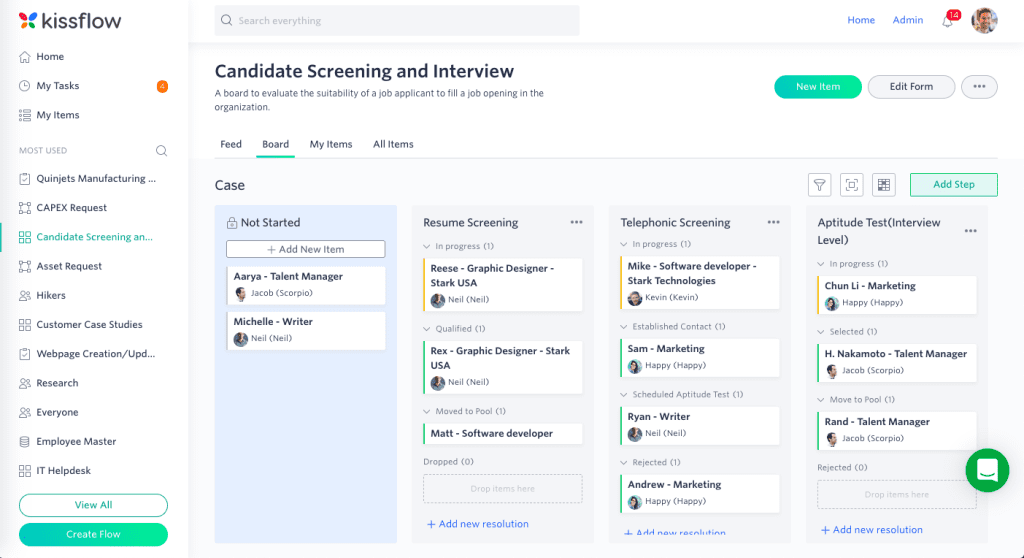
Naturally, these templates are also available in the no-code tools, which include familiar features such as a drag&drop form builder.
The website provides fairly transparent pricing, based on monthly subscriptions and user numbers. Small Business and Corporate plans offer different feature sets, while enterprise pricing is finalized through a custom quote.
Bonitasoft
Finally, a European provider also makes our list: Bonitasoft, headquartered in Paris, France. Founded in 2009, it generated approximately $11 million in revenue last year with a workforce of 102, putting its revenue close to that of Kissflow.
Bonitasoft offers a graphical process editor that may look slightly more conservative, but remains clear and easy to navigate. It includes numerous features and allows users to implement the rules governing a process while modeling it.
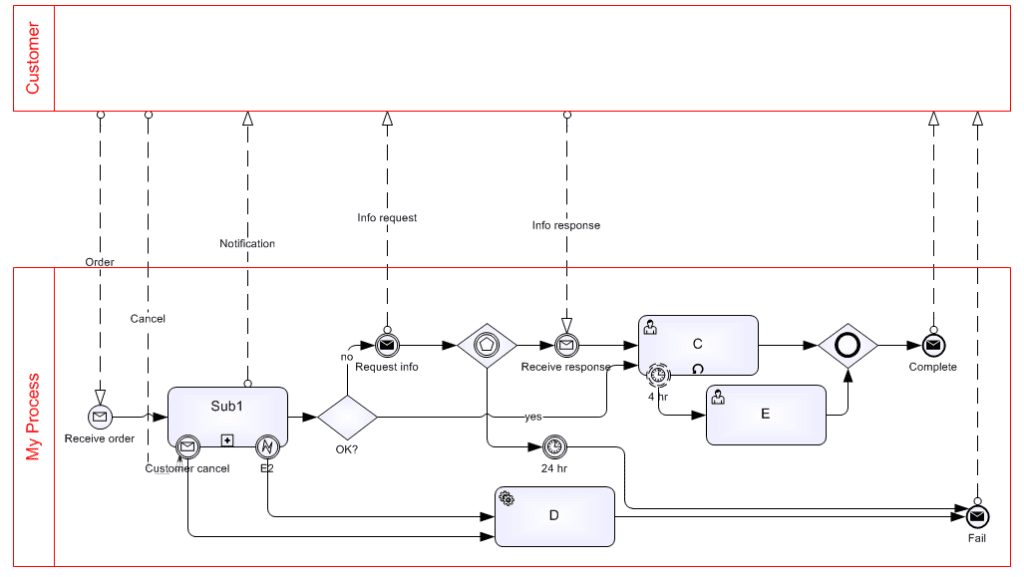
Within its range of solutions, the open-source Bonitasoft distinguishes its Business Process Management (BPM) tool, which focuses on business process automation and enables process modeling using the BPMN 2.0 standard.
Adaptive Case Management (ACM) supports the testing of individual business scenarios, while separate RPA functionality is also available to automate individual process steps.
Although pricing is not available on the website, a wealth of public materials and documentation can be downloaded to help users explore the product. A public list of resellers and implementation partners is also available, identifying providers that can offer local assistance with system implementation.
Summary
We maintain that there is no clear dividing line between workflow software and low-code / no-code platforms. Our classification was based on the additional tools these platforms offer beyond the familiar graphical process modeling and form editing features. Each provider takes a different approach: some seek to stand out through mobile application development features, while others focus on professional cloud application management. We particularly recommend the solutions discussed here to organizations that can develop in-depth expertise in their chosen platform and intend to build and manage their business applications in-house.