Background to the market research
This market research was commissioned from an external partner by Click On Hungary Kft., the developer of xFLOWer. The aim was to provide our prospective customers with an objective overview of software vendors specializing in workflow and process automation.
For further background information and a summary of the methodology, please read the introductory article in this blog series.
Scope
Categories
- Hungarian market players
- Work management
- Enterprise workflow
- Low code / no code
Comparison criteria
- Features
- Infrastructure
- Pricing type
- Public pricing / custom quote
- Pricing model
- Free trial
- Platform (desktop, web, mobile app)
Further information about the scope and terminology used can be found here.
Workflow – a tool for enterprise process automation
In our introductory article, we sought to establish a definition to help readers understand the categories and solutions presented. In this post, we review products from international software vendors that we placed in the workflow category in our informal classification, based on the marketing messages and features communicated by their developers. For workflow solutions, we assumed that these products are chosen by large enterprises looking to automate a specific priority area, such as HR or finance, or a particular process.
Although geography has little significance in today's globalized world, we grouped the competitors geographically for clarity. Our list of leading international vendors includes two European and four US companies.

Bizagi and Camunda
In Europe, the Bizagi brand has become almost synonymous with business process management. Since its foundation in 1989, the company has provided general-purpose process management consulting and enterprise process automation. Although it describes itself as a low-code / no-code solution in several places in its communications—and we have already discussed the fine line between these categories—we classified its offering as a workflow solution because this is where it shares the most similarities with its competitors. More specifically, the Bizagi platform offers customers three key tools to achieve their objectives. Bizagi Modeler supports process mining and business process modeling. Few process managers would fail to appreciate this BPMN-based tool, whose graphical process editor feels just like using an application from the latest Microsoft Office suite.
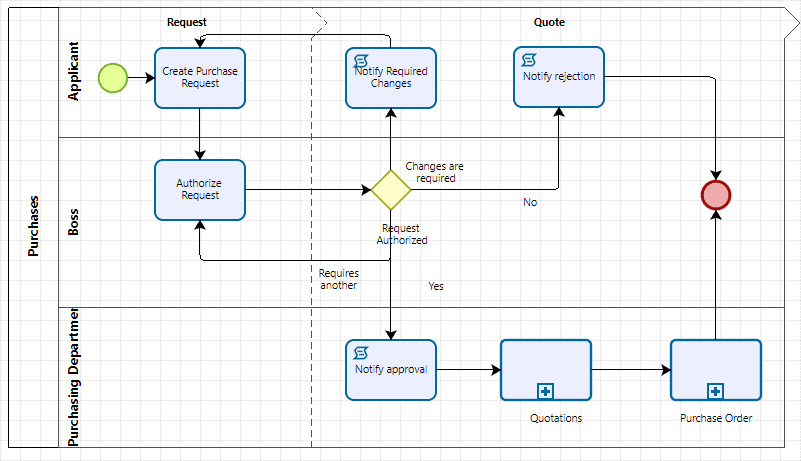
The Bizagi Studio and Bizagi Automation modules naturally follow the same design. The former is where the real transformation begins: while Modeler only allows processes to be modeled, or visualized, Studio turns them into working applications. You can start by importing a flowchart created in Modeler or drawing a new one, then follow a defined sequence of steps to specify the data, create forms, and configure the automation rules. This raises the question of whether the offerings listed above should really be considered three separate products, since all are required for automation. By comparison, almost all the functionality of xFLOWer, a product from a Hungarian vendor, is available within a single platform. Although its process editor module—which enables process modeling and rule configuration—requires a separate subscription, all other features, including the form editor, template editor, and permission management, are available as standard administrative functions within the system. Marketing considerations aside, however, Bizagi's exceptionally attractive and user-friendly UI is certainly a strength that will appeal to many users.
Public pricing is rarely available for enterprise solutions of this kind, although it can be found on the xFLOWer website mentioned above. Bizagi offers a free 30-day trial, providing enough time to explore its main features.
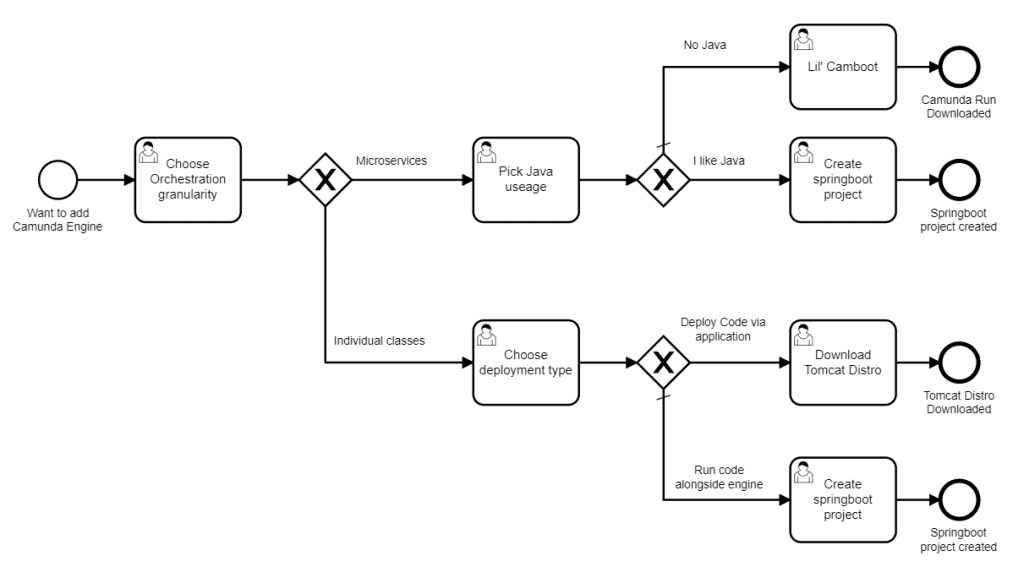
If you are looking to try a workflow solution for free, Camunda is also worth exploring. This European company is headquartered in Berlin. Founded in 2008, it is not far behind Bizagi in terms of size and revenue. One clear difference, however, is that its website provides specific prices for both SaaS and on-premise deployments.
Camunda follows a similar approach to its competitor, providing customers with a graphical editor, Camunda Modeler, for drag&drop business process modeling. A particular advantage is that Camunda supports the DMN standard alongside traditional BPMN, allowing users to create much clearer processes by incorporating decision tables and decision tasks. Design is, of course, subjective, but the interface is clean, even if it is not quite as distinctive as Bizagi's.
The workflow and decision engine, which handles branching, is called Zeebe. It also includes key development tools discussed earlier, such as the form builder.
Prospective users evaluating Camunda will find it easier to obtain pricing information, as its website includes a comprehensive pricing page. Alongside the free plan, there is a Professional plan with public pricing that includes 10 users, 1 executable model, and a specified number of automations. An Enterprise quote can also be requested, with a detailed calculator available to prepare an initial estimate. This takes into account factors such as the number of users, the number of process models available for testing, process variables, decisions, and more.
Pipefy
In numerical terms, Pipefy outperforms its European competitors. Founded in San Francisco, USA, in 2015, it closed last year with approximately USD 116 million in revenue and employs nearly 630 people. Its public customer references clearly demonstrate its focus on enterprise environments, featuring automotive companies such as Volvo and Toyota, as well as technology company IBM. However, its pricing model does not exclude small and medium-sized businesses, as it offers highly affordable entry-level plans for them too. A detailed comparison of the available plans is provided, including a free option for 10 users with a limited number of workflows and features. For more demanding requirements, Business and Enterprise plans are available, with monthly fees based on user numbers. Above a certain number of users, requesting a Custom quote is worthwhile, as it can provide significant discounts compared with list prices.
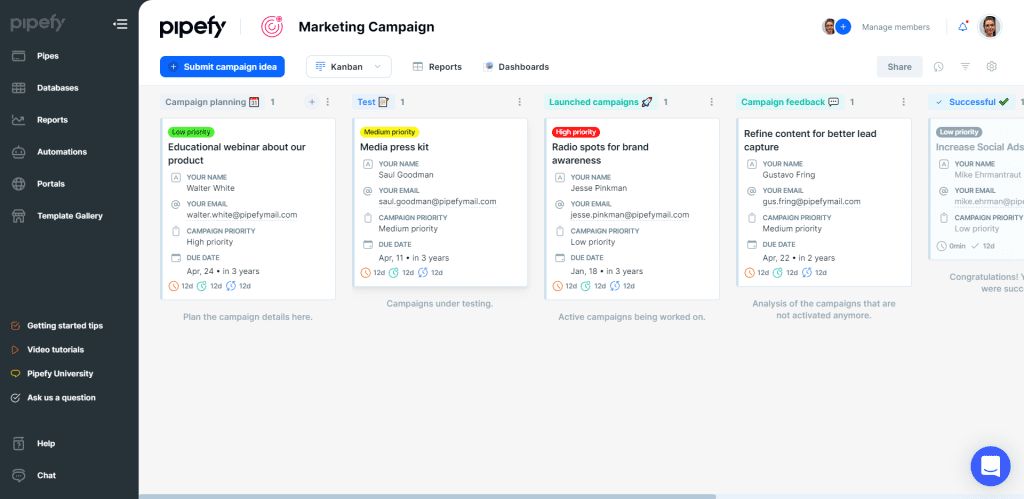
Workflow solutions range from modern, user-friendly interfaces to systems with a more dated appearance. Pipefy would certainly rank among the leaders if visual design were the deciding factor. Its exceptionally clean and modern interface makes every feature easy to understand, allowing all types of users to work with it comfortably.
Its colorful appearance should not be misleading, however: the system was designed for complex business environments. This is reflected in the fact that, although Pipefy is a single platform, its solution is built around five core business areas.
One of its most popular components is its highly customizable CRM, which provides comprehensive sales support, from creating lead capture forms and managing prospects and existing customers to automating the associated processes.
Human resources (HR) is often an undeservedly neglected area when it comes to process support. Pipefy seeks to address this by automating recruitment, onboarding, and offboarding processes.
Although procurement and finance are generally covered by ERP systems at most businesses, a workflow solution can be a valuable complement. Pipefy offers capabilities in these areas too, including purchase request approvals and the management of incoming and outgoing invoices.
Request management is not limited to procurement: the system also supports customer service, IT, and other areas. A graphical editor is available for automation, although it differs somewhat from the modeling tools discussed earlier. In Pipefy, tasks and their statuses are managed in a kanban view, similar in appearance to Trello. Here, users can configure the scenario-based automations seen in Monday.com and Infinity, choosing from a wide range of predefined actions—for example, automatically sending an email based on a selected template when a task's status changes. A process can therefore have several entry points, such as a predefined form, an email, or another automation. The system then guides the task through predefined stages, with a graphical designer also available for this purpose.
IGrafx
There are, of course, several other reliable US solution providers with excellent products, including iGrafx and Process Street. The former has been active in process improvement consulting since 1991 and has since developed a comprehensive software portfolio at its headquarters in Portland, USA. iGrafx closed the previous financial year with USD 12 million in revenue and 83 employees. Its products have earned the trust of numerous large enterprises, with customer references including Meta, Braun, Denso, and Munich Airport.
The Process360 Live concept and platform offer several tools that simplify business process management for large enterprises. One example is process mining, which collects and analyzes the digital footprints generated within a company to map its actual processes and establish a foundation for process improvement. While the core work behind the scenes involves database and log analysis and the processing of vast amounts of data, the results are presented through a clean user interface that makes the processes understandable to any end user.
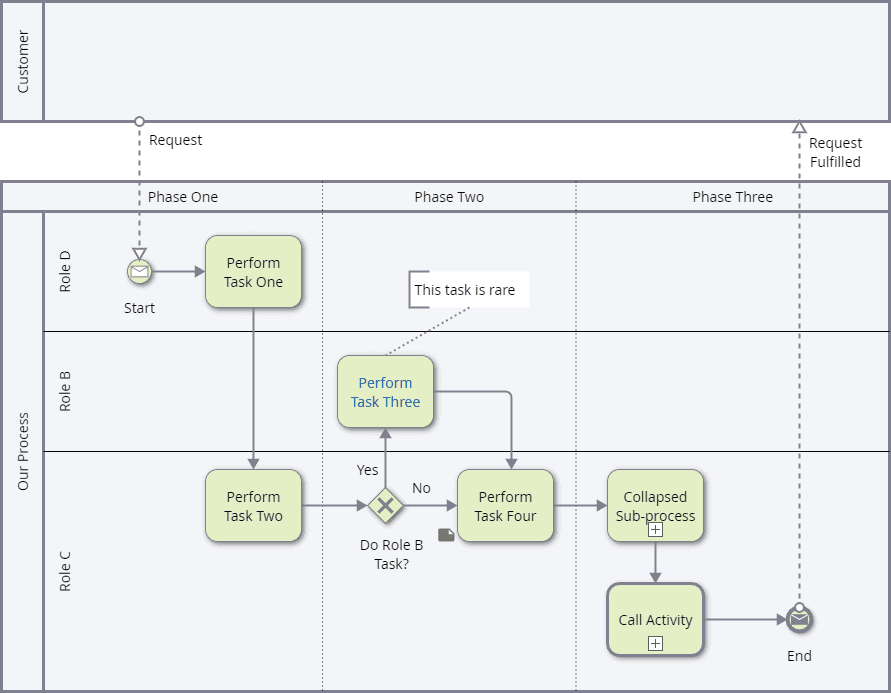
iGrafx also provides a visual process modeling tool for modeling processes according to BPMN standards. These processes can be tested with a tool called Scenario Simulation, where input and rule parameters can be adjusted to check how processes will run before going live. Although similar capabilities exist in other systems in various forms, such as dedicated test environments, iGrafx's communications and approach make it clear that it is more than a software developer supplying tools to customers. It also provides consulting based on a methodological approach encompassing discovery, modeling, testing, improvement, and implementation (BPR). Those wishing to explore the solution themselves have access to a free 30-day trial. Unfortunately, pricing information is not provided here either, but several resellers and system integrators in the EMEA region can help those looking to explore the solution in greater depth.
Process Street
Its similarly sized competitor, Process Street, does publish its prices. As is common, customers can choose from three plans, all offering unlimited workflows. These include Enterprise, Pro, and a Startup plan for new businesses, limited to just 5 users. Unsurprisingly, all are available for a monthly subscription fee. Also headquartered in San Francisco, USA, Process Street has been developing its solution since 2014 and generated approximately USD 8.3 million in revenue last year with 66 employees.
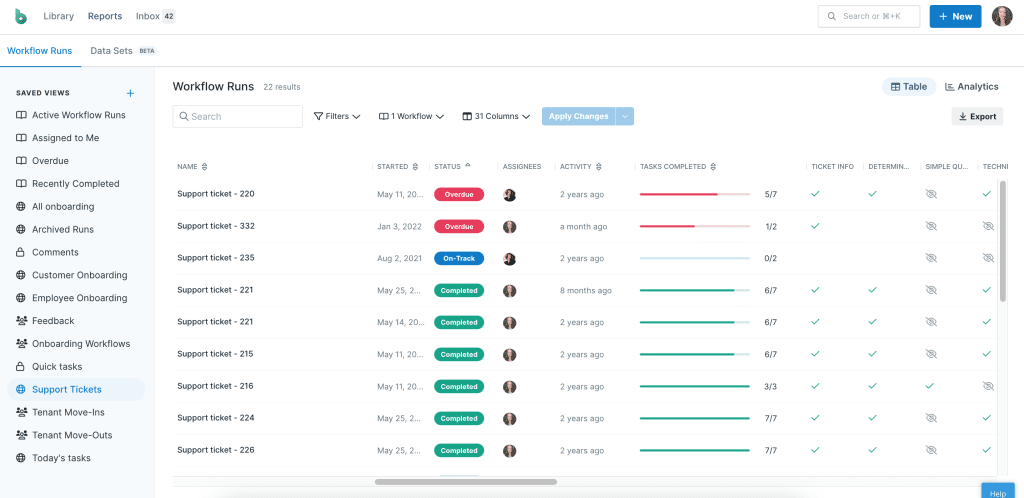
What else would one expect from an emerging, fast-growing US software vendor but an excellent, clean user interface, more than 3,000 pre-integrated third-party applications, and a wealth of ready-made process and form templates? Process Street delivers all of these. The only notable gap arises if you are looking for a process modeling tool that lets you draw processes graphically, as Process Street does not offer one. Instead, process-related elements such as forms and emails are created on a single screen by stacking sections using drag&drop. While this requires no development expertise, editing can become cumbersome for more complex, cross-functional processes with numerous branches.
GravityFlow
Finally, we should mention the Gravity WP solution from Rocket Genius, founded in 2008. It is particularly suitable for businesses whose processes begin with the submission of a web form. The WP in the solution's name hints at its connection to WordPress, the world's leading CMS, for which Rocket Genius became known by developing a wide range of add-on modules. Gravity Form is a popular plug-in for creating custom web forms. It can be extended with the Gravity Flow plug-in, which enables simpler automations alongside an integrated Flowchart feature.
Public pricing is available on the vendor's website, organized into Core, Pro, and Ultimate license plans with different features and support levels. Due to the nature of the solution, fees are based on the number of websites managed rather than the number of users.
Summary
Beyond the solutions listed here, countless other companies develop process management systems, both in Hungary and internationally.
When choosing software, the support provided alongside its features can be an important consideration, as designing business processes requires substantial expertise.
At Click On, we support our customers throughout the entire journey, from software implementation to the complete design and configuration of their processes.