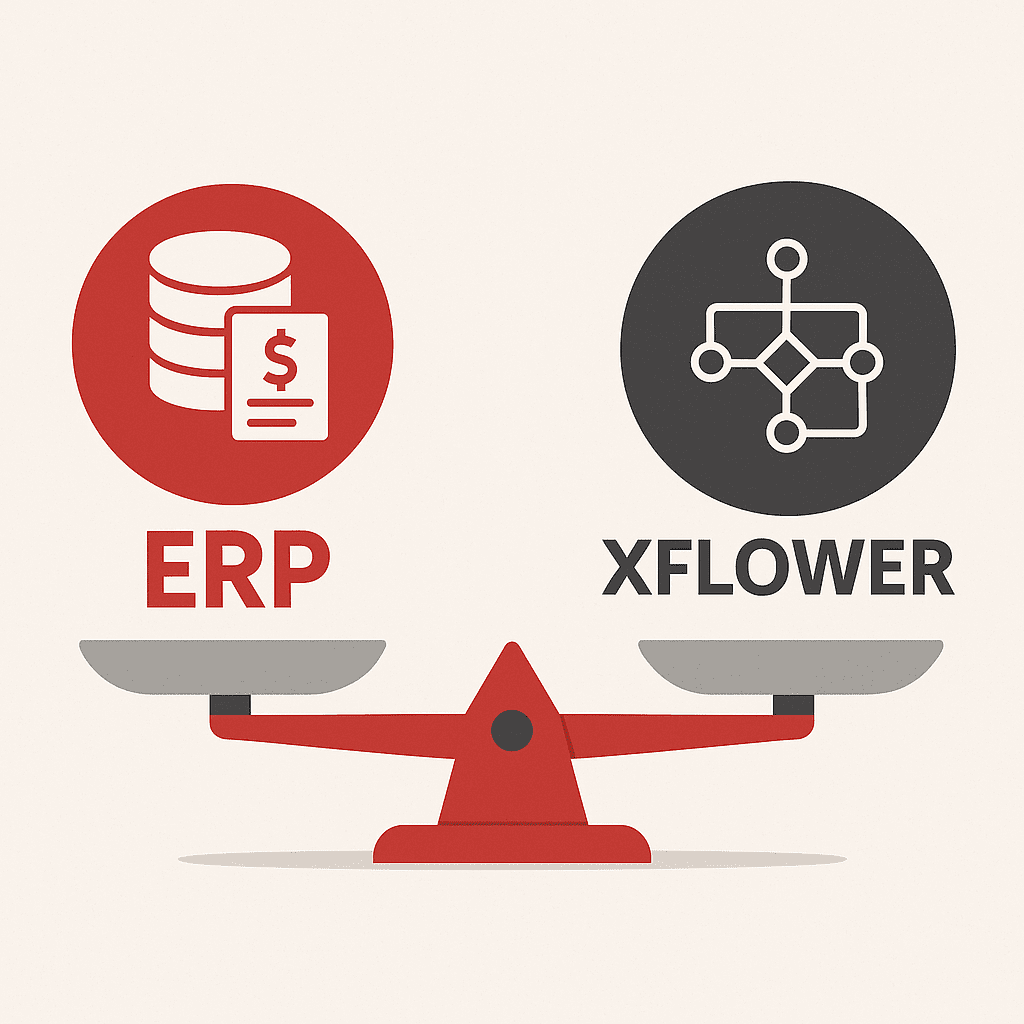
In every area of life, we strive to find the best solutions—or at least those that best suit our needs. This applies whether we are buying a car, a house, or software. It is a natural and entirely understandable expectation. It also seems logical that choosing the right solution requires an understanding of the available options. How can we achieve this? By comparing the products and services on the market. Today, we have numerous resources for this purpose: online product reviews, comparison websites, and even manufacturers’ product descriptions and claims.
What is the underlying assumption?
In these situations, we assume that the products being evaluated serve the same purpose—in other words, that they offer broadly similar capabilities. We therefore compare cars with cars, speakers with speakers, and washing machines with washing machines. This is commonly called comparing apples with apples—and rightly so. But what happens when we are not making an apples-to-apples comparison? Can products within a single category differ so much that they require entirely different pricing, operation, and handling? As we will see, the answer is definitely yes.
Cargo ship or sports car?
Take a broad product category such as means of transport. This category includes aircraft, ships, trucks, bicycles, scooters, and so on. Suppose we want to buy a car and get the best value for our money within that product category. In this case, we focus exclusively on cars within the broader category and rule out everything else. We will not compare cars with cargo ships. We can refine our search further within the car category: petrol, diesel, or electric? Saloon or estate? Family car or sports car? MPV or SUV? And so on—we can ask many more questions and compare individual options within the category against countless additional criteria.

Would we ever consider buying a cargo ship instead of a sports car?
Of course not. It would be amusing to hear someone debating whether to choose a Toyota Yaris or an Ideal X T2-SE-A1 tanker for their daily commute.
Differences
Here, too, the key lies in the differences between categories. When we need to make a decision within a narrower group, the differences are smaller than when choosing from a broader range. The differences between ships and cars are obvious, so when we need a car, we do not even consider whether to buy a ship instead. However, we may spend considerable time weighing up two or three types of car. Ideally, this brings us closer to our goal of finding the right one.
How does this relate to software?
As with any other purchase, we want to choose the best software possible—that is, the software best suited to our business. A good starting point is to look for solutions to specific business problems, rather than following trends or adopting a vague “let’s do something with this” approach. The parallel with the categories outlined above is that “software” is an umbrella term, just like “means of transport”. There are so many variants within this broad category that choosing between them can be overwhelming. Although the differences between individual software solutions can be substantial, they are not as obvious as those between a car and a ship—but they can be just as significant. This makes it important to be clear about our objective: what problem are we trying to solve? Even the business software category is extremely diverse. Continuing the earlier analogy, we could equate it with land transport. We may still make the mistake of comparing trucks, tractors, and sports cars and making a decision on that basis, but we are one step closer than if we were also considering ships and aircraft. Ideally, we want to compare cars with cars, so it is equally important to focus on a specific area when evaluating business software. There are ERP systems, CRM systems, invoicing solutions, and workflow systems. If a particular type of business system will solve our problem, we should search within that category rather than looking for a solution that “does everything”. No such solution exists, just as there is no combined car, truck, aircraft, and ship.

Our experience
When our clients select software, we often see them trying to explore as many proposals and products as possible, including solutions developed for entirely different needs and business problems. If this leads to a mistake in the selection process, the system will never perform as required, because it was not designed for the intended use. Think of commuting to work by cargo ship: it generally does not work, and even if it does, it is hardly ideal. We recently encountered a similar situation with a prospective client. They requested quotations for three different systems, only to conclude that the sole similarity between them was that they all had a price—so that became the basis for their comparison. Imagine being given an apple, a zebra, and a hammer drill and being asked to identify and compare their shared characteristics. After comparing prices, the prospective client chose the cheapest solution. To continue the analogy, they bought an apple, even though their actual need was to exhibit an animal at a zoo or drill 15,000 holes.
Will it work?
Probably not. The hardest part in such situations is acknowledging the poor decision and taking the necessary action. Nobody likes admitting a mistake, especially when a high-value purchase is involved. Sooner or later, however, the time comes when the apple can no longer be passed off as a zebra, and someone must also acknowledge that it cannot drill holes. Throughout this transition, the company continues to lose out: implementation requires not only money, but also time and effort. The implemented system becomes a burden on employees, day-to-day operations may slow down, and even the delivery of projects already won may be put at risk. Only once the mistake is acknowledged can the company begin to mitigate the damage and select a suitable system—one that, ideally, will start generating returns rather than losses over time.
Lessons learned
In our view, the starting point should always be to examine the purpose a particular software tool serves. It is important not to choose software on the expectation that it can “do everything”. Consider your requirements and align them with the objective you want to achieve. If the software’s purpose and your requirements overlap sufficiently, it may be worth pursuing that option. If not, move on as soon as possible and look for another solution. What about price? Making a decision on price alone carries the risk of buying an apple instead of a zebra, so this is not advisable either. Once we have established that two or more tools offer the same functionality, comparing their prices may make sense, because functionality is what we need. We should also remember that, in software as in other areas, price and quality generally go hand in hand, within reasonable limits. In the longer term, the cheaper option may prove expensive: the true value of business software lies in the additional revenue it can help generate, including through time savings or freed-up resources. This should therefore be our guiding principle when selecting software: which solution will make our business operate as efficiently as possible in the medium and long term?