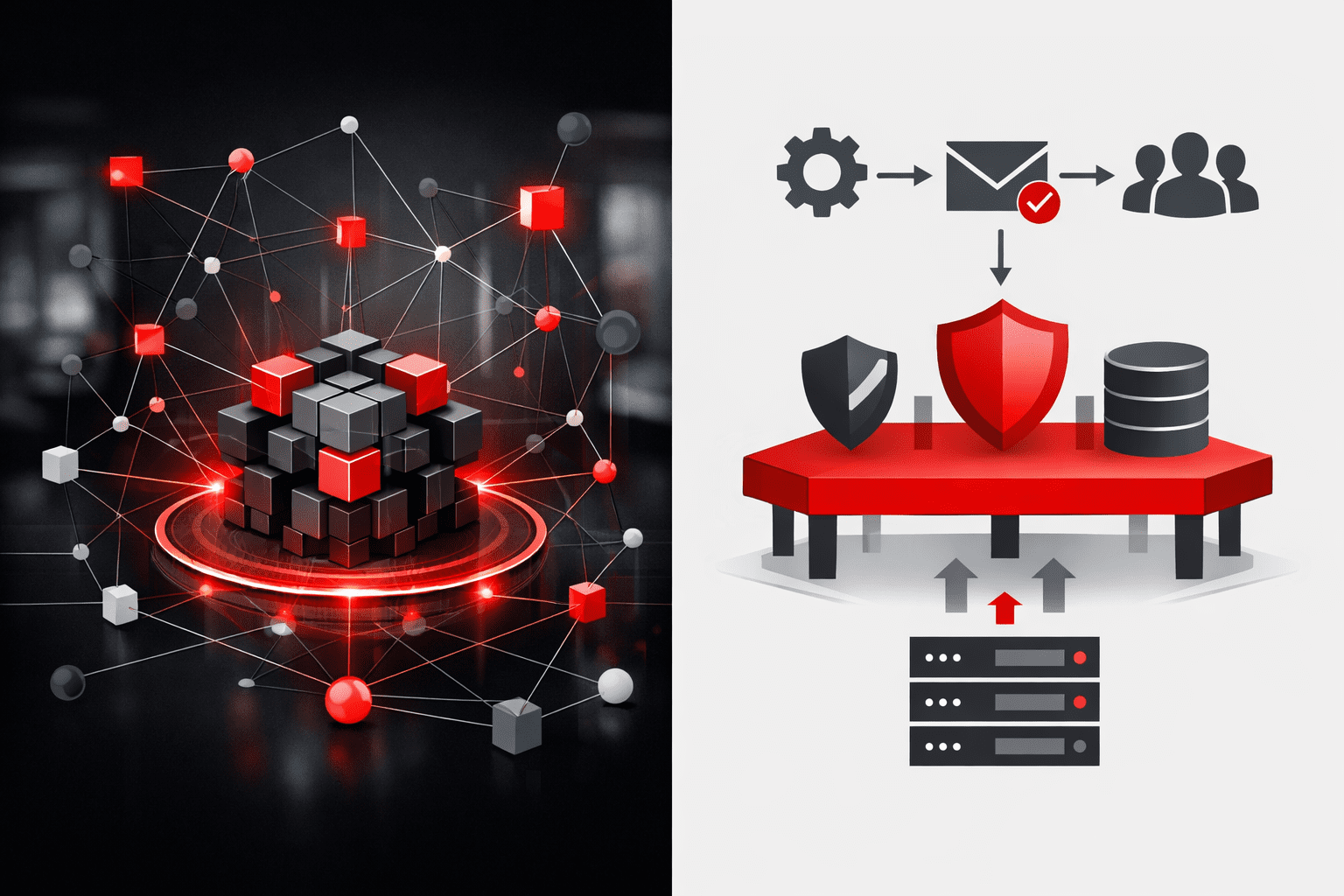
Procurement is one of the most critical functions in any organization: it directly affects costs, operational efficiency, and competitiveness.
Poorly managed procurement makes an organization slow, opaque, and costly, while a well-digitalized, transparent, and automated system can provide a significant strategic advantage.
The goal of digitalization is to standardize and automate processes from requisition to payment and make results measurable (for example: cycle time, error rate, cost savings, and supplier performance).
This digitalization has accelerated in recent years: traditional Excel- and email-based operations are increasingly being replaced by dedicated procurement systems, global e-marketplaces, and workflow-based solutions.
However, the market is not uniform:
- requisition submission and approval require one type of solution,
- an internal “store” (catalog/punchout) requires another,
- tendering or public procurement requires yet another,
- and supporting suppliers' daily bid submissions is a separate category.
The following overview presents the main categories, typical products, and implementation pitfalls within a consistent conceptual framework, along with practical selection criteria and metrics.
The purpose of this article- present the different levels of procurement,
- compare international and Hungarian solutions,
- clarify the role of workflow systems,
- highlight implementation pitfalls,
- organize success metrics (KPIs),
- review modern trends (AI, mobility, integration, sustainability).
- position the xFLOWer workflow platform alongside other market players
- provide a comprehensive, objective overview of every market player
- compile and explore every existing concept
- S2C (Source-to-Contract): sourcing, RFI/RFQ/RFP, evaluation, contracting.
- P2P (Procure-to-Pay): requisition → approval → PO → receipt → invoice → payment.
- S2P: end-to-end (S2C + P2P) coverage in a single platform. Ivalua's summary provides a useful overview of the entire process.
- Workflow/BPM: flexible process orchestration (BPMN/DMN), decision logic, and approvals; typically complemented by integrations.
- Bid portal / e-tender: transparent, auditable management of buyer-issued tenders and supplier submissions.
- Upstream: S2C (sourcing→contract), Downstream = P2P (requisition to payment)
- Slow, error-prone paper-based and manual processes
- Lack of transparency: who ordered what, in what quantity, and with which approvals
- Unconsolidated purchasing volumes — weak negotiating position
- Tracking supplier relationships, performance, and contract management
- Integration with accounting, ERP, and warehouse management
- Reporting, analytics, and decision support
The purpose of procurement software is to digitalize, automate, and standardize procurement processes (for example: requisition → approval → order → receipt → invoice → payment).
The different levels of procurement
“Procurement” actually encompasses several distinct levels. For one organization, the biggest challenge may be preparing requisitions; for another, operating a supplier marketplace; and for a third, conducting public procurement. Accordingly, software solutions also have different areas of focus.
1) Preparation and submission
- Recording requisitions and checking budgets
- Automating approval chains
- Notifications and transparent status tracking
Typical challenge: duplication, lost emails, and incorrect requisitions.
Mini case study (fictional): At a mid-sized manufacturing company, requisitions arrived by email. Decision-makers did not respond while traveling, so processing took weeks. After implementing a workflow system, approvals could also be completed on mobile devices, reducing cycle time by 40%.
2) Supplier store / marketplace
- Internal “webshop” with approved suppliers
- Supplier-maintained catalogs (price, description, availability)
- Standardized ordering process
Typical challenge: keeping prices and catalogs up to date.
Mini case study (fictional): A regional logistics company introduced an internal marketplace for purchasing office supplies and IT equipment. Consolidated purchasing volumes and transparent catalogs delivered price savings of around 20%.
3) Tender management and public procurement
- Managing RFI/RFQ/RFP requests
- Comparing bids, scoring, and preparing decisions
- Regulatory compliance and auditability
Typical challenge: complex regulations and a heavy documentation burden.
Mini case study (fictional): A local authority managed hundreds of public procurement procedures annually by email. An e-tender system made the entire process traceable; audit time decreased by approximately 30%, and administrative errors were virtually eliminated.
4) Supplier-side support
- Organizing bid submissions
- Tracking bid deadlines
- Document management and version control
Typical challenge: submitting multiple bids each day increases the risk of errors and delays.
Mini case study (fictional): A construction industry supplier standardized bid preparation using a tender management system. Administrative work decreased by approximately 50%, while the number of bids submitted increased.
The four levels of procurement and system strengths
| Procurement level | Typical processes | Strong systems / examples | Notes |
|---|---|---|---|
| 1. Preparation and submission | Requisition capture, approval processes, budget checks, notifications | Workflow systems: xFLOWer, Camunda, Microsoft Power Automate, Nintex | Highly flexible, with configurable approval logic of any kind, but no supplier functionality. |
| 2. Supplier store / marketplace | Internal “webshop” with approved suppliers, e-catalog, supplier portal | SAP Ariba Catalog, Coupa, Hungarian ERP modules (sERPa, Octopus, T-Method) | Global systems offer advanced marketplaces, while simpler versions are available within ERP systems. |
| 3. Tender management and public procurement | Issuing tenders (RFI, RFQ, RFP), receiving and comparing bids, public procurement compliance | SAP Ariba Sourcing, Ivalua, JAGGAER, CPS (Hungarian) | International systems excel in tender management; CPS is specifically compatible with Hungary's Public Procurement Act (Kbt.). |
| 4. Supplier-side support | Bid submission, bid document management, deadline and tender tracking | Bid management systems (e.g. Mercell, Proposify), supplier portals | This area supports suppliers' work, not that of the buying company. |
Why this matters: anyone looking for a “procurement system” must first clarify which level they need a solution for. There is no universal answer: a workflow system is often enough for preparation; a marketplace calls for global P2P/S2P; tendering/public procurement requires dedicated modules; and supplier support is a separate category.
Key selection criteriaBefore selecting a system, it is worth clarifying the most important dimensions:
- Features / coverage – how fully does it cover the process (sourcing, contract management, approvals, P2P, invoicing)?
- User-friendly interface – quick onboarding and day-to-day usability.
- Integration with existing systems – ERP, accounting, warehouse, CRM (APIs, standard interfaces).
- Scalability and flexibility – can it grow with the organization?
- Licensing / pricing model – SaaS vs. on-premise, number of users, transaction fees, TCO.
- Security and data protection – GDPR, auditability, encryption.
- Support and updates – SLA, customer support, vendor stability.
- Community features and benchmark data – AI-driven recommendations, marketplace, benchmarking capabilities.
International system categories
Full S2P (Source-to-Pay) suites
Examples: SAP Ariba, Coupa, Ivalua, JAGGAER, GEP
Advantages: complete process coverage, mature analytics, ERP integrations
Disadvantages: high cost, complex implementation, “fit-to-standard” approach (the company must adapt)
P2P (Procure-to-Pay)-focused solutions
Examples: Proactis Marketplace, Precoro, Procurify
Advantages: rapid implementation, user-friendly purchasing experience
Disadvantages: upstream (S2C) functionality is typically more limited
S2C (Source-to-Contract) focus – e-sourcing / e-auctions / CLM
Examples: Ivalua (end-to-end S2P with strong S2C), JAGGAER (strong sourcing), Fluenta (RFx, e-auctions, CLM).
Advantages:Structured RFx, e-auctions, and CLM → stronger competition, measurable savings, better compliance.
Disadvantages:Upstream focus – P2P is not available out of the box; integration and change management are required.
Workflow and BPM platforms (Hungarian and international)
Examples: xFLOWer, Camunda, Microsoft Power Automate, Nintex
Advantages: flexible alignment with existing operations, rapid changes, no/low-code development, extensible beyond procurement to HR, customer service, and IT processes
Disadvantages: S2P functionality (tendering, SRM, catalogs) requires integration
Hungarian solutions
Localized systems are also available in the Hungarian market. Examples include:
- CPS Beszerzés Támogató Rendszer – full lifecycle coverage, public procurement compatibility
- T-Method module – integrated logistics and procurement
- Progen sERPa ERP, Octopus ERP, SZÁMADÓ ERP – modules offered as part of an ERP system
- Fluenta - cloud-based, modular e-sourcing (RFI/RFQ/RFP) and e-auction platform
Advantages: Hungarian language, local support, tax compliance, lower costs
Disadvantages: slower pace of innovation, limited international scalability
Workflow or a dedicated procurement system?
Workflow system (e.g. xFLOWer)
- Custom rules and approval logic can be modeled
- Can also be used in other areas (HR, customer service, IT)
- Rapid changes and prototyping
Dedicated procurement system
- Built-in supplier database, bid management, and contract management
- Benchmarking and AI-driven spend analysis
- Out-of-the-box best-practice processes
Which approach suits which organization?
For mid-sized companies: a workflow system (e.g. xFLOWer) tailored to procurement is often sufficient and can also cover other areas (HR, customer service, IT).
If the goal is to adopt industry standards and ready-made processes, an off-the-shelf P2P/S2P system can also be a good choice.
However, if alignment with existing operations and the ability to make rapid changes are important, a workflow-based approach offers greater flexibility.
For large enterprises: where procurement is a strategic function in its own right, a dedicated procurement system is worth considering.
In many cases, a fit-to-standard approach works well: the company adapts to the system and follows international best practices.
However, if the organization needs a flexible solution for its own processes, a workflow-based system (e.g. xFLOWer) is worth considering — either on its own or as a complement to a dedicated system.
Implementation pitfalls
- Fit-to-standard methodology: the company must adapt to standard processes
- Advantage: a clearer process landscape and less technical debt
- Disadvantage: resistance and additional workload where organizational transformation is not the goal
Alternative: a workflow platform that fits existing operations and integrates only the missing capabilities (ERP, e-invoicing, DMS, e-signatures).
KPIs and measurability
Automated reports can track:
- Cycle time reduction (requisition → PO, invoice approval)
- Error rate reduction (e.g. three-way matching)
- Cost savings (better price negotiations, increased on-contract spend)
- Supplier performance (SLAs, deadlines, quality compliance)
- Compliance and transparency (on-policy purchasing, audit trail)
Most systems offer dashboards — it is worth setting specific targets as early as the MVP phase.
The role of xFLOWer
xFLOWer offers a strong alternative for mid-sized and large companies:
- Starting from a workflow/BPM foundation, it covers the full logic of approvals and document flows
- Can be extended with P2P and S2P functionality through integrations
- Can be customized quickly, so the company does not have to adapt to the software
- Proven in both Hungarian and international environments, with local support
Recommended for organizations that:
- do not want an S2P implementation lasting years and costing hundreds of millions of forints,
- still want to digitalize procurement professionally,
- and also bring other business areas (HR, customer service, IT, legal) into process management.
The table below presents the three approaches in detail (workflow, dedicated procurement systems, Hungarian solutions), with examples and practical notes.
Detailed comparison (with examples)
| Criterion | Workflow systems (e.g. xFLOWer, Camunda, Power Automate) | Dedicated procurement systems (e.g. SAP Ariba, Coupa, Precoro) | Hungarian solutions (e.g. CPS, T-Method, sERPa, Octopus, Fluenta) |
|---|---|---|---|
| Focus | General process automation; modeling any business process | Specifically optimized for the complete procurement lifecycle | Mixed: dedicated procurement (CPS) and ERP module-level support |
| Functionality | Flexible workflows (requisitions, approvals, notifications, integration) | Specialist functionality: supplier database, tenders, contracts, spend | Modules tailored to local requirements, public procurement support |
| Implementation | Requires custom process modeling; more consultation at the outset | Faster start thanks to best-practice functionality | Rapid implementation, lower localization risk, Hungarian support |
| Flexibility | Very high: any organizational rule can be modeled | More limited: requires adaptation to the framework | Good, especially for small and mid-sized companies; rapid customization |
| Integration | Connects to almost anything through APIs and ERP/CRM connections | Standard integrations with major ERP systems (SAP/Oracle/MS) | Often operates as part of an ERP → accounting/warehouse already integrated |
| Price / cost | More cost-effective when digitalizing multiple processes together | High licensing and implementation costs, but can deliver a return for large enterprises | Generally better value for money; lower licensing and implementation costs |
| Scalability | Can be continuously extended with new processes | Strongly optimized for enterprise scale | Tailored to SMEs and large Hungarian companies; not always global |
| Regulatory compliance | Auditable with appropriate configuration; Hungarian Kbt. compliance is not out of the box | Global compliance (e.g. GDPR, SOX), strong auditability | Aligned with Hungarian tax and public procurement rules (VAT, EKR, etc.) |
| Recommended for | Digitalizing multiple areas within one framework; many custom rules | Strategic procurement with high supplier/tender volumes; benchmarking and marketplaces | Organizations already using the relevant ERP; localization and rapid implementation are priorities. Fluenta can also complement an existing ERP. |
Note (ERP modules): procurement modules in Hungarian ERP systems are generally ideal when the organization already uses that ERP — making integration less expensive and implementation faster. For a standalone, in-depth procurement transformation, a dedicated system (S2P/P2P) or workflow combined with targeted integrations is often more effective.
Decision matrix – practical recommendations
- Clarify the objective: preparation/approval vs. internal store vs. complete S2P transformation
- Readiness for change: fit-to-standard (adapting to the software) or flexible customization?
- MVP pilot: focus on 1–2 critical processes (e.g. requisition → approval → PO; RFQ → evaluation)
- KPIs from day one: cycle time, on-contract share, exceptions, SLA
- Integration plan: ERP, e-invoicing, e-signatures, DMS, APIs/connectors
- Compliance: GDPR (RBAC, logging), public procurement transparency (EKR, audit trail)
Conclusion
The right answer to “Which system is best?” starts with the target state and readiness for change.
If you are looking for fast, low-risk efficiency gains, a workflow approach is a natural choice, complemented by targeted integrations.
If you want a measurable, end-to-end S2P transformation with standards and marketplace connections, a leading S2P suite is a good starting point.
For public procurement, localized, audit-ready solutions offer advantages; supplier bid portals, meanwhile, improve efficiency on the supplier side.
Extra: implementation tips
- “Design for adoption”: optimize the user experience (forms, approval screens) for everyday work, not for an impressive demo.
- “Data first”: align master data (suppliers, items, cost centers) in the MVP phase; otherwise, KPIs will be inaccurate.
- “Change management”: communication + training + “rules for exceptions” (otherwise, users will revert to email/Excel).
- “Iterative expansion”: start with the high-value 20% (e.g. requisitions/approvals) and add a new capability every 2–4 weeks (catalog, three-way matching, contract lifecycle).
In 2025, most major procurement platforms already use some form of data-driven analytics (e.g. anomaly detection, predicted cycle times, risk scores). Such capabilities have appeared in the portfolios of Coupa, Ivalua, and SAP Ariba, but achievable results depend heavily on the company's own data quality and processes — setting internal KPI targets is more realistic than percentage-based “guarantees.”
The xFLOWer perspective: xFLOWer's workflow-based (BPM-style) approach allows outputs from AI/ML or simpler rules engines to be incorporated into approval chains (e.g. routing high-risk items separately, automatic notifications). This is not an out-of-the-box “AI package,” but an integration capability: we embed it where it delivers real value.
Fictional illustration: a mid-sized manufacturer uses xFLOWer to request a forecast for every requisition likely to face delays, based on timing data from previous orders. The team prioritizes these cases; internal measurements show shorter cycle times and fewer returned requisitions — specific figures depend on the organization's operations.
A brief conclusion on AI
AI capabilities are now complementary building blocks, not goals in themselves. The real advantage comes from combining them with high-quality data and well-designed workflows. Within this framework, xFLOWer offers a flexible alternative: it integrates AI and S2P/P2P capabilities where they create genuine business value — without unnecessary promises, guided by measurable KPIs.
When should you choose xFLOWer?
xFLOWer is an ideal choice for organizations that, based on the comparison criteria presented in this article, prioritize flexibility, rapid implementation, and broad integration capabilities.
- You do not want to adapt to the software – the system should reflect how your organization actually operates, not the other way around.
- You have complex approval logic and many exceptions – and want to model and maintain them.
- You want to develop in-house too – making no/low-code changes internally, without the vendor.
- You want to manage multiple business areas in one system – alongside procurement, invoice management, fulfillment, customer service, and HR.
- You need user-friendly operation – with quick onboarding and screens optimized for everyday work.
- You need strong integration – with ERP, accounting, warehouse, and CRM systems through APIs.
- Flexibility and scalability matter – the system should adapt quickly to organizational changes.
- You are looking for cost-effective implementation – a rapid MVP followed by iterative expansion, not a multi-year megaproject.
- GDPR compliance and auditability are required – detailed logging, RBAC, and secure data storage.
- You need local support – expert assistance in Hungarian and local compliance (e.g. Kbt., connections to Hungary's tax authority, NAV).
Decision matrix – which solution, when?
| If… | Then… |
|---|---|
| You need to model complex approval chains with many exceptions | xFLOWer – flexible workflow and rule management |
| You want to digitalize multiple business processes (HR, customer service, IT, finance) on a single platform | xFLOWer – one system, a unified approach across multiple areas |
| You want a rapid MVP and gradual expansion | xFLOWer – iterative expansion every 2–4 weeks, measurable KPIs |
| A fit-to-standard approach does not work for your organization | xFLOWer – the software adapts to the organization (fit-to-you) |
| You need an end-to-end S2P transformation with a global marketplace and benchmarks | A leading S2P suite (e.g. SAP Ariba, Coupa, Ivalua, JAGGAER) |
| Public procurement is the primary focus | A localized, Kbt.-compatible solution (e.g. CPS) or xFLOWer + targeted integration |
| You want to integrate procurement into an existing ERP that has a procurement module | An ERP module (e.g. sERPa, Octopus, T-Method) – fast and cost-effective; for in-depth transformation, xFLOWer + integration |
The key to successful procurement digitalization is clean integration with existing systems (SAP, Oracle NetSuite, Microsoft Dynamics, local ERP systems). A strength of major S2P suites is their standard connectors; in return, they often require a fit-to-standard mindset.
The xFLOWer approach: it does not force organizational standardization; it fits into the existing ERP/CRM/accounting/DMS environment through APIs and connectors. Common patterns include:
- SAP: requisitions, approvals, PO synchronization; optionally, e-invoicing and three-way matching.
- Microsoft Dynamics: cost center, general ledger account assignment, business partner/item master data reconciliation.
- NetSuite / local ERP: API-based connection of order and invoice processes.
- Custom systems: through no/low-code interfaces and REST/SOAP integration.
Hungarian example pattern (not a public case study): at a mid-sized company using SAP, xFLOWer took over the requisition→approval steps; the purchase order is entered into the existing ERP. The team reported more transparent status tracking and fewer manual steps.
Rapid implementation and measurable results
For many mid-sized companies, the key to success is a short MVP phase and iterative expansion. Case studies from market-leading P2P/S2P solutions reinforce this — although published figures cannot be generalized to every organization.
The xFLOWer path: gradual expansion in 2–4-week cycles. Initial scope: requisition → approval → PO preparation; this can be followed by catalogs, three-way matching, contract lifecycle management, and more. We measure returns using your own KPI scorecard.
Recommended KPIs (targets to be defined internally):
- Cycle time from requisition to order.
- Exception rate (cases requiring manual intervention).
- Share of on-contract spend.
- Error rate (e.g. invoice–PO–delivery note discrepancies).
- Supplier SLA tracking and performance.
Which approach should you choose, and when?
- xFLOWer (workflow-first): when you have many custom rules/exceptions, want to manage multiple business areas consistently, and see value in integrations.
- Dedicated S2P/P2P suite: when you want to align with industry-standard processes and a built-in supplier marketplace / benchmarking / SRM is important.
- Hungarian ERP module: when the relevant ERP is already in use and you want a fast, cost-effective start within your existing environment.