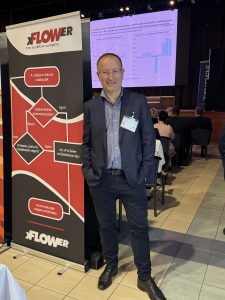
On April 10–11, 2025, I attended the spring meetup of MAJOSZ (Hungarian Automotive Component Manufacturers Association) in Debrecen, representing xFLOWer. Automotive manufacturers and their suppliers gathered to discuss the industry’s present and future: digitalization, automation, the shortage of skilled workers and competitiveness.
Below, I share some insights that I found particularly interesting.
Automation: no longer an option, but a necessity
“Automation is no longer an option; it is the only way forward.”
Labor shortages are felt in almost every industry. If people are unavailable, machines or software must do the job—this has become the unspoken motto. By leaving routine tasks to machines, existing employees can focus on areas where human input adds value.
Automation is therefore not about replacing people, but about extending their capabilities—and not just on the production line. Process automation, which xFLOWer also provides, is just as important here as robotic arms or RPA.
Low-code/no-code solutions: in-house development
“With low-code/no-code tools, we need to develop solutions ourselves, because we know best what we need.”
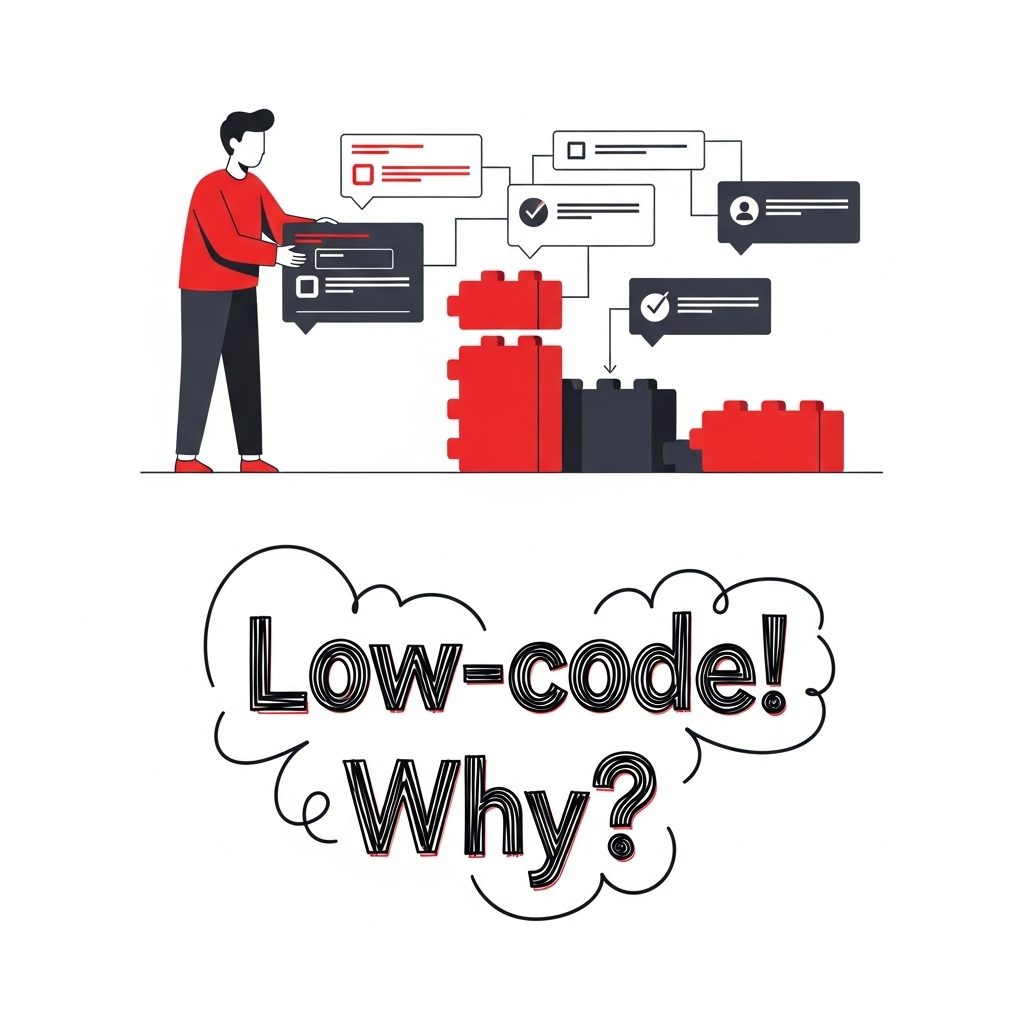
The future of digitalization lies in in-house development. Low-code/no-code platforms enable non-IT employees to actively shape how their company operates. xFLOWer is just such a tool: it can be placed in the hands of people who truly understand business processes.
Twenty years of stagnant productivity—increasing added value is the way forward
“We no longer have the competitive advantage in wages or energy that we once had—we must increase added value.”
Productivity in Hungarian industry has stagnated for years. The solution lies not only in machinery, but also in how we organize work. A robot or software solution is only useful if it fits into a well-designed process. Process automation is key here.
At one company, the presence of employees from the Far East motivated Hungarian workers—the direct comparison increased their productivity. This also demonstrates the importance of feedback and measurement systems.
Idle machinery has also become a common sight. This can result not only from a shortage of workers, but also from a lack of work. The example of a locomotive without a driver came up several times: the machine is there, but no one is available to get it moving.
Flexibility has become the key to survival—a new era of crises
One of the roundtable’s main messages was that everything changes from day to day. Companies that can respond quickly are the ones that can emerge as winners from situations such as the tariff war.
The tariff war could have been anticipated, but the real challenge lies not in the direct measures, but in their indirect effects. One day there is a tariff, the next day there is not—“so where does that leave us?” For a multinational company, this daily uncertainty in the business environment is particularly demanding.
Flexibility is a key factor not only in decision-making, but also in IT systems. Companies need supporting systems that can keep pace with daily changes—new rules, new priorities and new markets.
Supplier expectations from Chinese companies: speed versus regulation
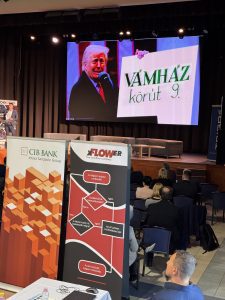
“Supplying Chinese companies means speed,” said representatives of the supply chain.
This expectation differs fundamentally from European practices. Chinese companies establishing operations here must learn not only how the EU operates—they are currently still learning from us how to comply with regulations—but also how to reconcile this with the fast-paced manufacturing culture they bring from home.
This dual requirement—speed and compliance—can create significant tension. Only flexible, controlled process management systems that can be adapted quickly can address it.
A slogan in one sentence: “It is in everyone’s interest to keep moving.”
This sentence came up several times during the discussions. It succinctly captures the industry’s shared goal: we must move forward, because anyone who stops moving falls behind.
Meanwhile, Europe faces another challenge: a loss of confidence. This uncertainty not only undermines internal operations, but also confuses customers. One telling example: “The world cannot make sense of 12 powertrain options.”
BMW’s Debrecen plant: a glimpse into the future of industry
Dr.-Ing. Jochen Lorenzen presented BMW’s Debrecen plant and its planning and construction processes. This is impressive in itself: in just a few years, a facility capable of producing 60 cars an hour is being built from scratch.
The challenges include people, sustainability, process excellence and, of course, digitalization.
When Ford’s CEO buys a Xiaomi car
Ford’s CEO bought a Xiaomi car. Why? That is certainly difficult to explain to family, colleagues, the market and investors!
“The car is so good that I had to buy it.”
That says a great deal. The rapid development of digitalized products is setting an example not only in manufacturing, but also at a strategic level—even for the largest players.
Bosch, innovation and lost knowledge
A few quotes from Dr. István Szászi:
“Bosch files a patent every 20 minutes.”
“If Bosch knew what Bosch knows, we would be very happy.”
This internal saying shows that knowledge only has value when it is accessible. The challenge is not a lack of knowledge, but ensuring that it flows—a well-structured workflow system can help with this too.
HR digitalization: automating the people side of business
HR processes can no longer be handled manually either. Recruitment, onboarding, internal training—as headcount grows, processes must evolve too.
Vocational training and careers: where is the recognition?
Responsibility for training is increasingly shifting to companies. Specialist career paths are not attractive enough—“until I become a manager, I am nobody.”
Working in the automotive industry used to be much more appealing to young people. They are still willing to commute 100 km a day, but the attraction is no longer the work itself—it is more about company benefits.
Job titles matter: semi-skilled worker or welding specialist—the task is the same, but the prestige is entirely different.
How can xFLOWer and process management help?
xFLOWer is a low-code process management system that we developed specifically for companies operating in rapidly changing environments without wanting to compromise on transparency, control or efficiency.
It enables you to:
-
automate internal business processes—from manufacturing to HR,
-
gain clear visibility into decision-making chains, deadlines and responsibilities,
-
let your organization shape its own operations without programming,
-
transform HR processes, such as onboarding and training, into a digitally trackable system,
-
and establish consistent operations across different departments or partners.
We do not provide robots, but a framework in which people and systems can work more efficiently together, bringing everything that can be digitalized into one connected environment!
Source: xFLOWer.ai Prompt: Develop an onboarding process for an automotive plant. Make sure to distinguish between engineering, semi-skilled and management roles. Include an itemized breakdown of the recommended steps, covering everything from access cards and company cars to workwear.