What exactly is identity management?

Identity Management is a method for verifying the identities of network entities and controlling their level of access to corporate network resources. It helps maintain the security of IT systems, networks and data.
What does this mean in practice, and how new is the concept for businesses?
The new NIS2 regulation requires the implementation of an access control framework as an integral part of IT systems, making it mandatory in 2024. One component of this is Identity Management (IM). Every entity—that is, every individual—must be uniquely identifiable and, indeed, identified as soon as they are granted access rights to a system. This involves a framework of rules and purpose-built tools that forms an integral part of the overall security system. Fortunately, the need for IM emerged much earlier, and some companies found IT solutions years ago. Naturally, a fully NIS2-compliant framework and its associated measures must be managed together. However, a standalone, process-based IM solution is already fully available for HR, as the practical example below illustrates.
Identity Management in business operations
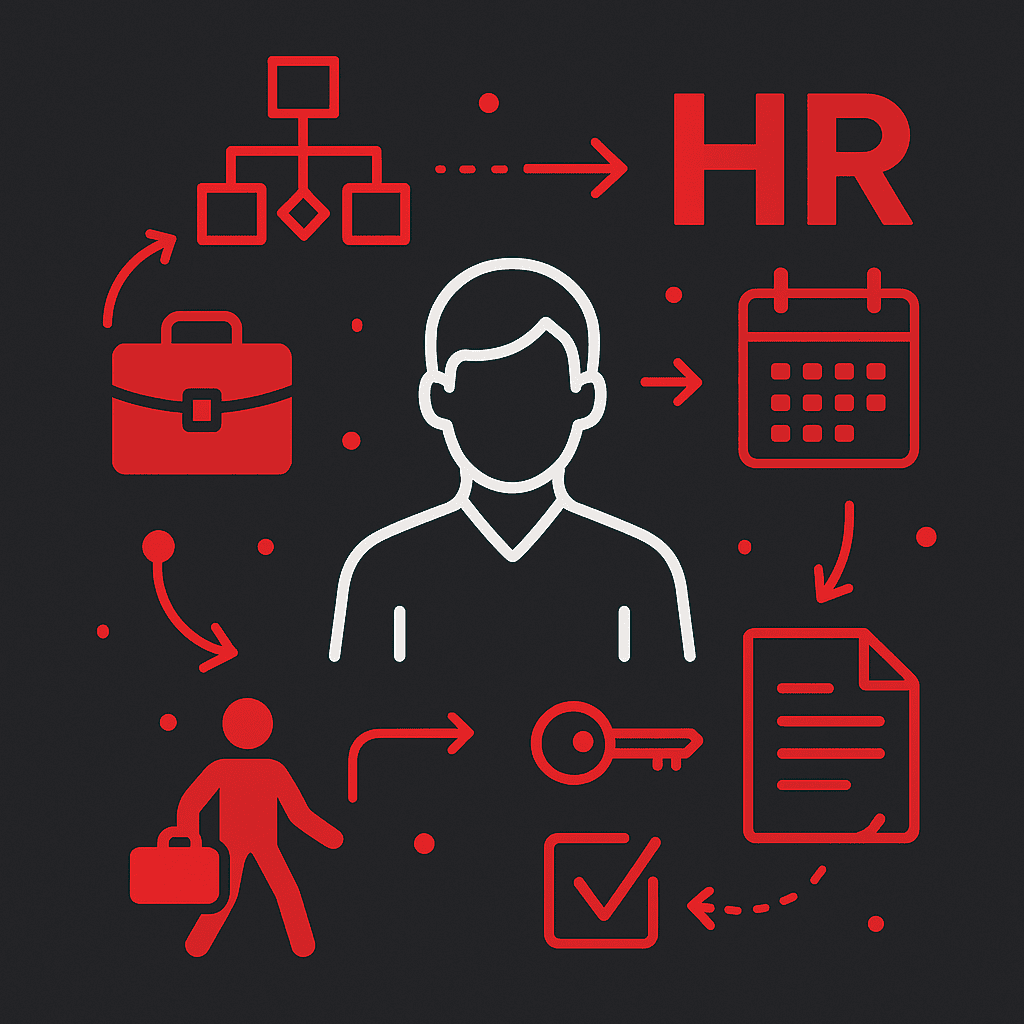
Several years ago, one of Hungary's largest media companies commissioned us to develop a solution for its specialized employee onboarding process. When launching a new program, the established practice was for the editorial team to inform HR of its staffing requirements and the equipment new employees would need. These could include equipment such as access cards, workwear, phones and cameras, as well as permissions such as access to a specific studio, news editing software or the digital archive. Over the years, this had become a routine procedure. However, when a program was discontinued or an employee left, there was no standardized process for revoking the permissions granted. As a result, the company paid many times more than necessary, for example, for software licenses that were not reclaimed in time. The client's request specifically focused on creating a controlled, transparent, process-based system to address existing challenges and reduce risk. The HR onboarding workflow built in xFLOWer ensured that new employees automatically received the necessary equipment and permissions for their roles when they joined. It also effectively resolved the main offboarding issue: access rights were automatically revoked alongside the return of issued equipment, delivering significant cost savings.
Security comes first
The use of IT devices and systems surged during the COVID pandemic, and attacks targeting them have become highly sophisticated and, unfortunately, effective. This underscores the need for preventive measures, including the implementation of IM. For organizations seeking an effective, customizable solution, xFLOWer has already proven its value: alongside the ready-made solution, custom workflows can be created in the shortest possible time.